

You’re looking for an IT course in Pune. You go online, check a few websites and see that every institute talks about practical training, live projects, internships or placement support. It all sounds promising, doesn’t it?
Here’s the catch. What does the internship really mean? Will you get to work on a project or will you just watch someone else do the work? Is the internship part of the course fee? Do you have to pay extra? After the course ends, will you get any help in finding a job?
These are fair questions, and you should ask them before you hand over your money.
If you’re looking for an IT course with an internship in Pune, don’t pick a course just because it says “internship” on the website. Two courses may say the same thing but the experience they offer can be totally different.
Let’s go through seven things you need to check before you enrol. That way you can choose a course that fits what you want and what you can afford.
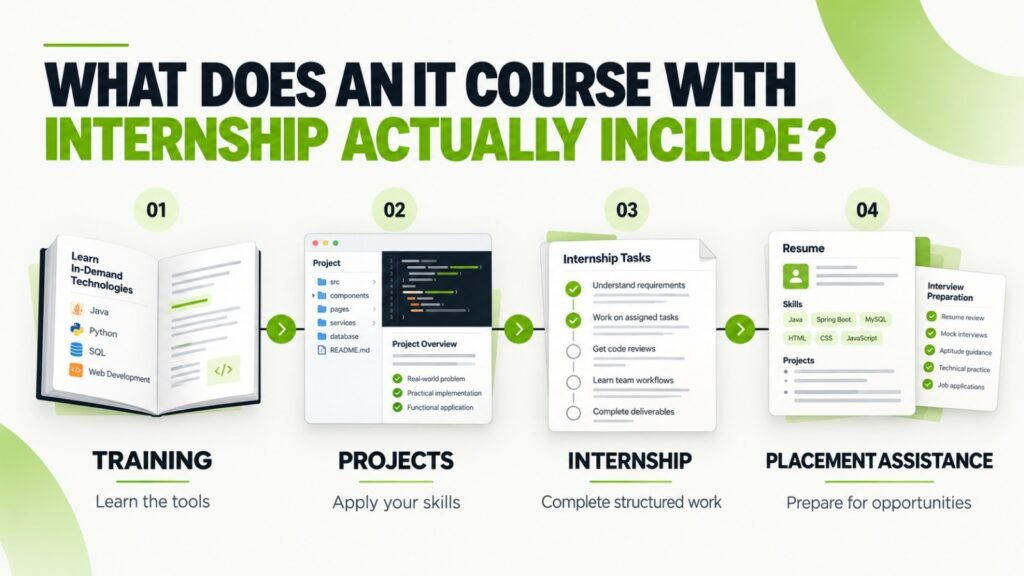
What does an IT course with internship actually include?
First we should clear up a point that is often missed. Training, projects, internships and placement assistance are connected. They are not the same.
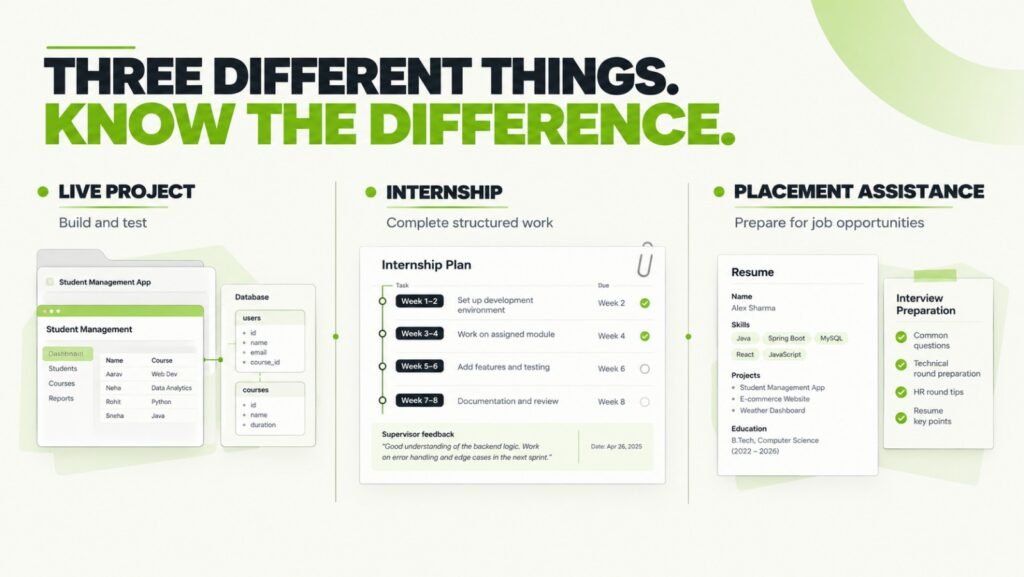
Training teaches the concepts and tools that a role requires. Projects let you try out those concepts. An internship normally means a period of real work with clear tasks and goals. Placement assistance often means help with a resume, mock interviews, job applications or real interview chances.
A programme might give all four. The useful thing is to see what each one really means.
For example, building a Java application during a course gives project experience. That does not automatically mean you have completed an internship with a company.
None of these four is automatically better than the others. The important thing is to know what you are paying for.
If you want to see how these elements come together in a training programme, take a look at FirstBit Solutions’ training, placement and internship programme and check which features apply to the course you’re considering.
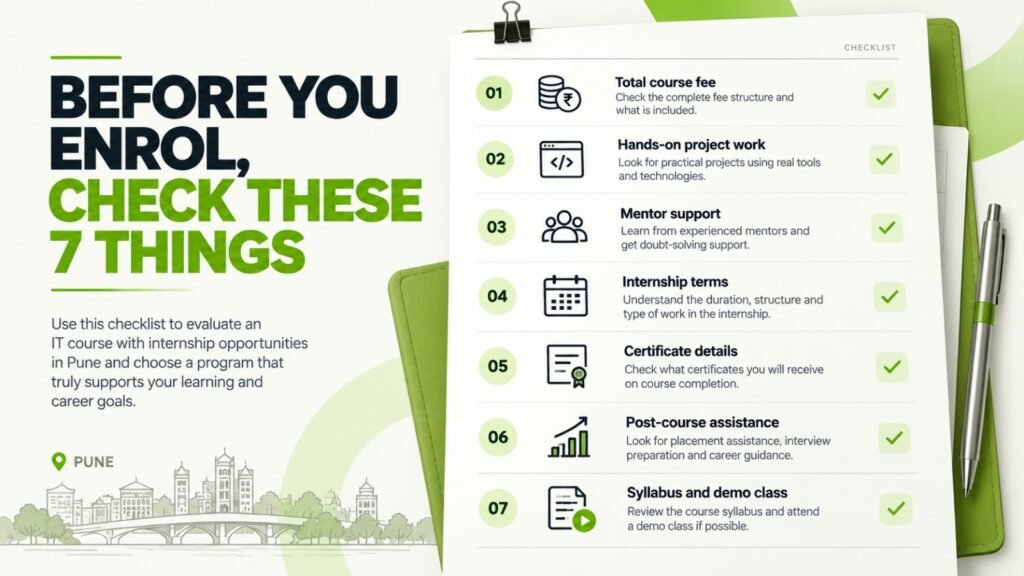
7 things to check before joining an IT course with internship in Pune
1. Is the internship included in the course fee?
Let’s start with the total cost.
You might see a course fee advertised on a website only to discover later that certain components cost extra. Perhaps the internship, certification, examination or another service has a charge.
Before enrolling, ask for a clear fee breakdown.
Find out whether the quoted amount includes the training, practical sessions, project work, internship component and certificate. Also ask whether there are any other charges you should know about.
This doesn’t mean you should automatically choose the cheapest institute. A lower fee isn’t much of a bargain if the programme doesn’t provide the support you need. At the same time, a higher fee doesn’t automatically mean better training.
Compare what you actually receive for the money.
If you’re considering an internship training institute in Pune, this is one of the conversations worth having with its admissions team.
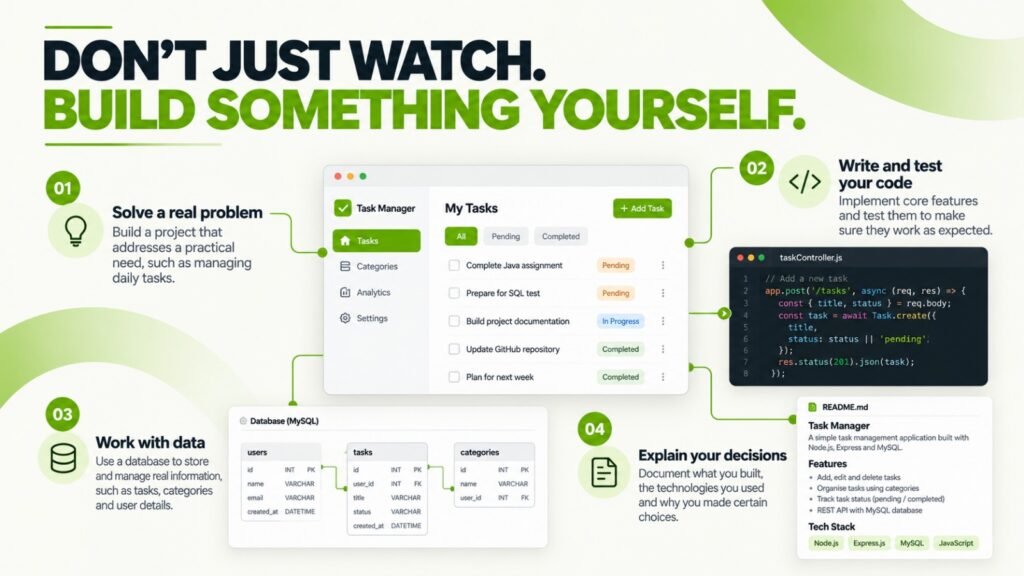
2. Will you build something yourself or just watch demonstrations?
Have you ever followed a coding tutorial, watched every part carefully and then had trouble writing the code on your own?
This is something that happens to a lot of beginners.
Seeing someone solve a problem can help you see the steps clearly. When you are working on your own, you need to figure out why something went wrong, find the mistake and decide how to fix it.
That is why doing the work yourself is important.
Before you sign up for an IT course that includes live project training, ask what you will actually make. Will you do tasks on your own? Will you work on a project from start to finish? Will someone look at your work and tell you what needs to be better?
The answer should be clear and specific for the course.
For example, a person learning Java might create an app that saves and retrieves information from a database. Someone studying data analytics might build a dashboard that answers a business question using a set of data.
The exact project is not as important as what you do in it. You should be able to talk about what you made, how it functions and why you chose certain ways of doing things.
This is more helpful than just putting a project name on your resume and hoping an interviewer does not ask questions about it.
The projects you complete can also give you something concrete to discuss when applying for jobs. This guide to building an IT portfolio for freshers in Pune explains how to present your skills and project work more clearly.
3. Who will help you when you get stuck?
This matters especially if you are new to the field of IT.
At first you may struggle with a programming mistake, a problem with a database, or something else that seemed simple during classes. A little guidance from an experienced person can save you hours of trouble.
So, in addition to asking whether the institute offers mentorship, make sure you know how exactly it will be provided.
Are you allowed to ask questions during practical classes? Is there somebody who checks your code or project? Will you get comments on your errors? What happens if you fall behind?
Make sure also that the programme itself includes practical classes and is not only theoretical.
Of course, you don’t need to be handed the solution to every problem. That would even be counterproductive, because solving problems on your own is an integral part of any technical education.
However, you do need some way of getting a hint when you are really stuck.
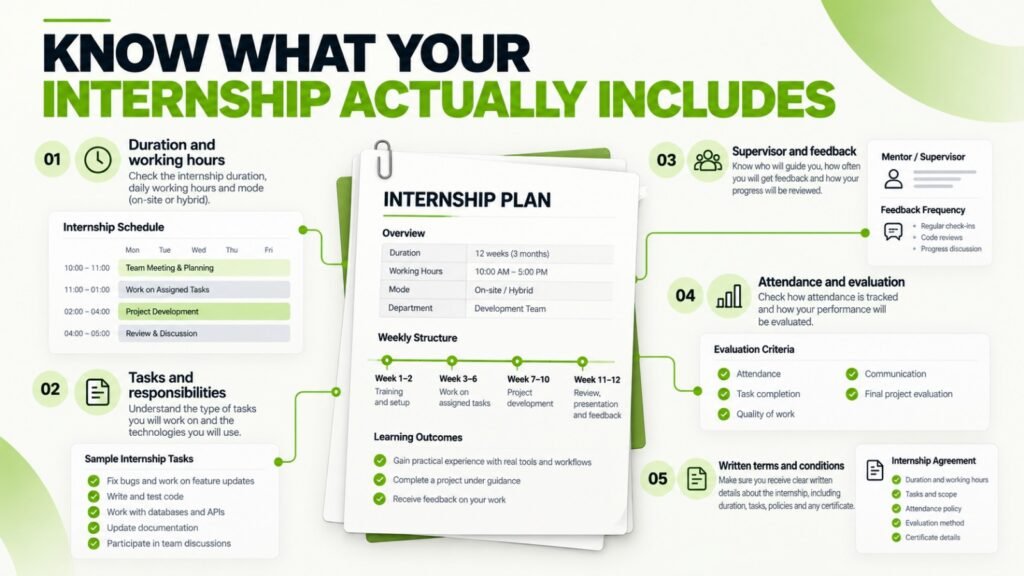
4. What are the internship duration, tasks and conditions?
The meaning of the word “internship” varies from programme to programme. This is why you must understand the whole arrangement before joining.
Ask about the duration of the internship, its starting date, your working hours and what is expected from you during the internship.
Also ask whether it is an in-house internship, an external internship or a remote one, because each works differently.
One programme might involve supervised assignments while another gives you an internship period along with its own requirements. It is up to you to find out which arrangement is being offered.
These are some questions you should ask before registering:
- What will I be required to do?
- Whose supervision will I be under?
- Is there a mandatory attendance requirement?
- How will I be evaluated?
- Will I be given written information about the internship?
If the institute talks about company projects, external internships or client work, ask what applies to your particular batch and programme.
That way you can clear up any confusion beforehand.
5. What certificate will you receive?
Certificates can be useful when you want to show that you have gained certain knowledge during the training. Even so, it is important to know what the certificate actually proves.
It may be a course completion certificate or an internship certificate, and each of these means something different.
First, find out who issues the certificate, what exactly it covers and what you need to do to receive it.
Also find out what the requirements are: attendance, assessments, project submissions, or something else.
Remember that a certificate on its own cannot tell a future employer everything about your skills.
For example, imagine two candidates applying for a junior developer position. Both have completed training, but one can explain the project, show the code and talk about the decisions behind it, while the other has only a certificate and cannot explain anything.
The first person has something real to talk about.
6. What happens after the internship ends?
This is something to clarify at the very beginning, especially if you are planning to start your career right after the training.
Some training centres offer placement assistance along with training. That phrase can mean different things.
Placement assistance might include resume preparation, mock interviews, job alerts, referrals or access to interviews. All of this can help, but it does not always mean the same thing everywhere.
Clarify what support will be provided and whether there are any eligibility conditions.
If you are comparing an IT course with placement assistance in Pune, try to find out exactly what happens once you finish the training programme.
Will anyone help you prepare your resume? Will there be mock interviews? How will you be told about relevant job openings? Will the institute help you prepare for the role you are targeting?
You should also ask what placement assistance applies to the internship itself. Completing an internship does not automatically mean you will get a job.
Be careful with broad claims such as “guaranteed placement” unless the conditions are clearly explained in writing. No training programme can remove every factor involved in hiring.
The aim is to find out what support you’ll receive, not simply rely on a promise.
7. Can you check the syllabus and attend a demo before paying?
You would not buy a phone without checking its features. It is just as sensible to examine a course before spending money on it.
Start by looking at the syllabus.
Does it cover the skills needed for the role you’re interested in? Does it include time for practical work? Are the projects relevant to what you will be learning? Is the course suitable for your level?
If you are a beginner, a programme that assumes you already know programming may not be the right starting point for you.
A demo class can help you judge the teaching style of the course. You can see whether the explanations make sense, whether you can follow the session and whether the approach feels comfortable.
If possible, ask about the trainer’s experience, batch size, practical hours and the support available outside classes.
You do not need to know everything about technology before joining a course. That is the point of training. You should, though, have a reasonable idea of what you will learn and how the institute plans to teach it.
If the answers to your questions remain unclear, take your time before making a payment.
Internship vs live project vs placement assistance: what’s the difference?
These terms often appear together on course websites, so here’s a simple way to tell them apart.
| What is offered? | What it generally means | What you should check |
|---|---|---|
| Live project | Practical work on a defined project | Your individual contribution and feedback |
| Internship | A structured period of practical experience | Duration, tasks, supervision and conditions |
| Internship certificate | Documentation of an internship or its completion | Issuer and completion requirements |
| Placement assistance | Support with the job-search process | Services offered and eligibility conditions |
Several of these can sit inside one programme. That’s fine, as long as you know what each one involves.
For instance, doing a live project as part of a training programme does not always equal working as an intern. In the same way, getting placement help does not guarantee employment.
Once you understand the differences, comparing two programmes becomes a lot easier.
Which type of IT internship programme should you choose?
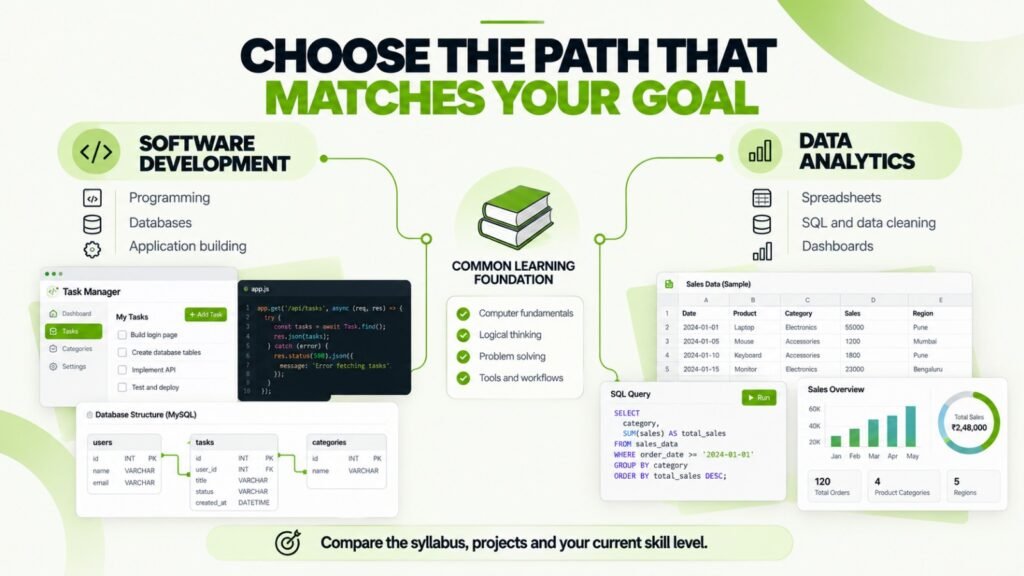
This depends on the type of work you want to do.
If you are interested in software development, look for chances to practise programming, databases, application development and debugging. A Java Full Stack programme, for example, should help you see how the different parts of an application work together.
You can explore this Java Full Stack developer career path to learn which skills are needed.
If you are more interested in working with data, look for hands-on work involving spreadsheets, SQL, data cleaning and dashboards. A Data Analytics course in Pune is worth looking into if that fits your interests.
You do not have to decide your whole career today. Having a general idea of the work you want to try will help you pick a more suitable programme.
Don’t choose a course just because it lists the newest tools or technology names. Choose one whose syllabus, projects and teaching style match your starting level and your goals.
Is an IT course with internship worth the fee?
Having an internship attached to a programme does not by itself make it worth the money.
Think about what you receive within the full programme. Are the skills useful? Will you practise them yourself? Is there anyone who will review your work? Are the internship conditions clear? Is the price reasonable for what is included?
When an institute gives you that information, you are in a much better position to judge.
If there is no way to find out anything about the programme, its terms and any additional charges, do not pay straight away.
A good programme should give you a clearer idea of the work you are learning to do. It should also give you experience you can show in some form.
That is how you judge value, rather than choosing a course because of a certificate or an internship claim.
Explore IT training and internship options at FirstBit Solutions
If you’re comparing IT courses in Pune with internship opportunities, take time to understand the programme before enrolling.
FirstBit Solutions offers IT training programmes across different technical areas. You can explore the FirstBit Solutions website to review the available courses and find one that matches your interests.
Before making a decision, ask about the specific course syllabus, practical projects, internship duration, completion requirements, fees and the placement assistance available for that programme.
The right choice isn’t necessarily the course with the longest list of promises. It’s the one whose actual training and practical opportunities make sense for you.
Frequently asked questions
Some IT training programmes include internship opportunities alongside classroom or online training. The options and terms vary by institute and course. Check the syllabus, internship duration, tasks, and eligibility conditions before enrolling.
Not always. Some programmes include the internship in the overall fee, while others may charge separately for certain components. Ask for a complete fee breakdown and confirm the terms before paying.
No. An internship may help you gain practical experience, but employment depends on your skills, performance, eligibility, and available openings. Placement assistance is not the same as a guaranteed job.
Yes, some programmes are designed for beginners and fresh graduates. However, prerequisites differ. Check whether you need prior coding knowledge, a particular educational background, or any other skills before joining.
Ask for written details about the internship, including its duration, responsibilities, supervision, completion requirements, and certificate issuer. If a company or external organisation is involved, verify the arrangement rather than relying only on verbal claims.