
Typed “what is java full stack developer” into Google and landed here? You’re not the only one. The term gets thrown around constantly, in job postings, course ads, that one cousin who just switched careers and won’t stop talking about it, and somehow it still doesn’t get explained properly half the time. Let’s actually fix that.
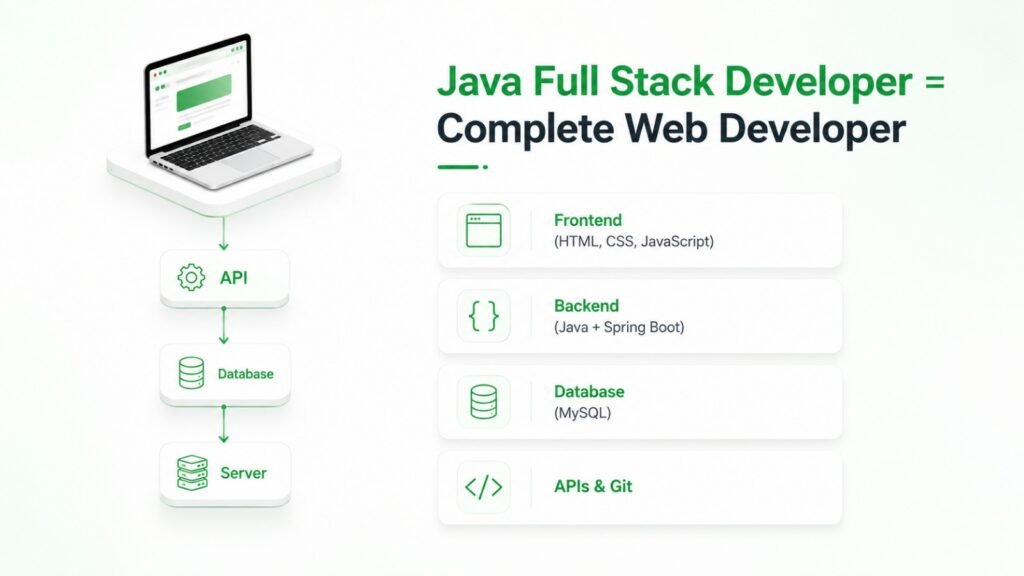
A Java full stack developer builds both halves of a web application using Java, plus the supporting cast that comes with it: HTML, CSS, JavaScript, SQL, and frameworks like Spring Boot. Not just the part users click around on. Not just the invisible logic running on a server somewhere either. Both. That’s the whole point of “full stack”: you’re not stuck in one lane of the application; you own the entire road.
Stick around, and by the end you’ll know what Java full stack development is in practice, what skills employers actually check for, what a Java full stack developer salary really looks like at each stage, and the concrete steps to become one yourself. No fluff, just answers.
The Quick Answer
A Java full stack developer builds and maintains the complete lifecycle of a web application, meaning the frontend interface people interact with and the backend logic, database connections, and APIs quietly running behind it, using Java as the core backend language alongside the frontend and database tools that go with it. Full stack means full stack. Not half.
Frontend and Backend, Explained Without the Jargon
Confusion usually starts right here, so let’s slow down.
On the frontend, you are developing what the user will see and interact with. Interface design, making buttons and forms function as required, ensuring that everything works fine with a different web browser or screen resolution. HTML is responsible for structuring content, CSS takes care of styling, JavaScript adds interactivity to it, and once it gets complicated, a frontend framework such as Angular or React becomes involved.
The backend side is totally different. Users don’t have any idea about what goes on there, but this is precisely where an application becomes functional. This is where the server-side code, database interaction code, and API integration are located to facilitate the communication between the backend and frontend. According to Oracle’s official Java documentation, Java is a language tailored for portability, security, and efficiency, which is probably the reason why this language remains relevant in the backend development field and did not become extinct, unlike many other languages that were popular for a limited time. Backend programming mainly relies on frameworks such as Spring, Spring Boot, and Hibernate.
Why Do So Many Companies Still Build with Java?
However, if Java has been around for decades, then why do companies still hire Java full-stack developers instead of transferring their systems to new languages altogether?
Because when it comes to applications, reliability is always a better choice than trends.
Systems used by banks, hospitals, insurance companies, airlines, and many other large e-commerce websites have to be reliable every year. Java developed that reputation over a long period of time. It handles large volumes of requests effectively, provides security features, and contains a huge amount of useful libraries and frameworks to help with the development of complex applications.
Spring Boot is another reason why it happens. With it, developers don’t have to create the entire application on their own but can develop a secure and scalable one very quickly using the best industry standards.
This is the main reason why Java will still be hiding somewhere behind many applications which people use regularly.
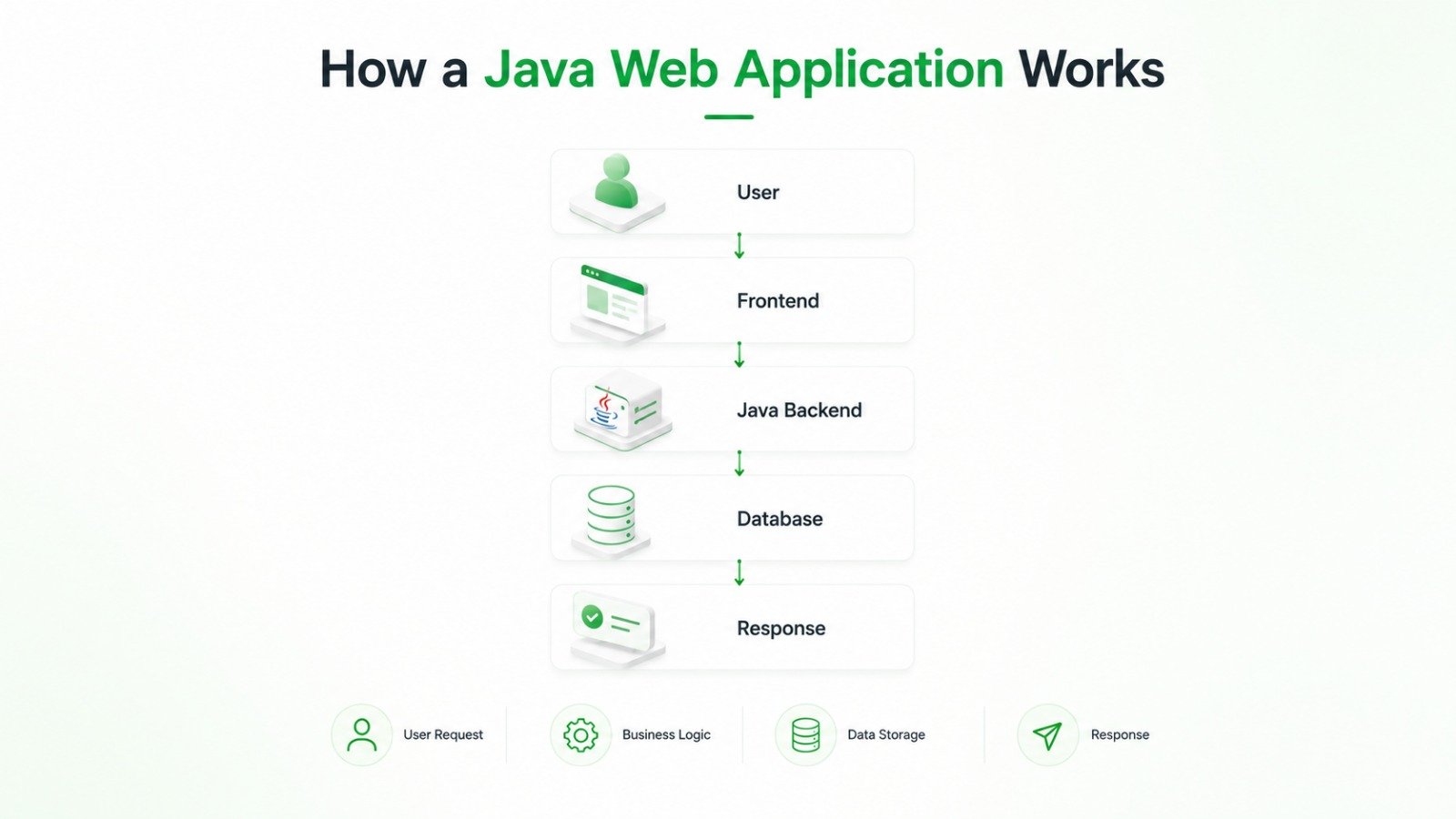
So what does that mean for Java full-stack developer roles and responsibilities day to day? Realistically, it’s designing interfaces, writing and maintaining backend logic and APIs, handling database interactions, testing and debugging across both sides, and working with a team to ship something that actually works end to end, not just a feature that looks good in isolation. The real skill isn’t knowing frontend and backend separately; it’s understanding how a request actually travels from someone’s click, through your backend, into a database, and back out again as something they see on screen.
Java Full Stack Developer Skills You Actually Need
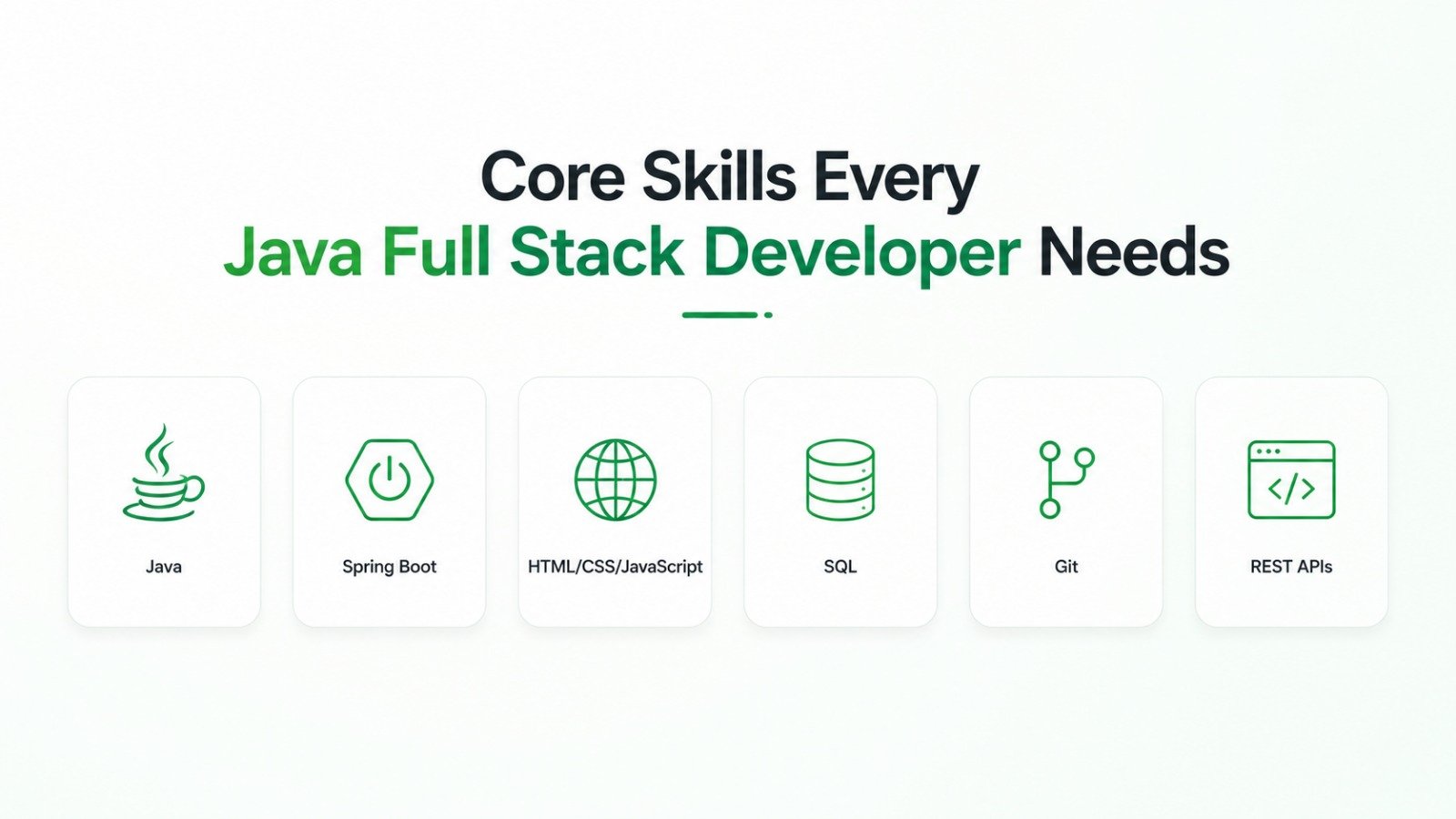
People keep asking for a plain list instead of another wall of text. Fair enough, here’s exactly what Java full stack developer skills are required in 2026, covering the Java full stack developer technical skills that actually show up in interviews, not just theory.
Skill Area | What It Covers |
Core Java and OOP | Language fundamentals, object-oriented programming principles |
Frontend basics | HTML, CSS, JavaScript |
Frontend framework | Angular or React |
Java frameworks | Spring, Spring Boot, Hibernate |
Database and SQL | MySQL or similar, plus real SQL query skills |
Version control | Git and GitHub |
Soft skills | Communication, teamwork, staying calm under pressure |
The Tools You’ll Use Almost Every Day
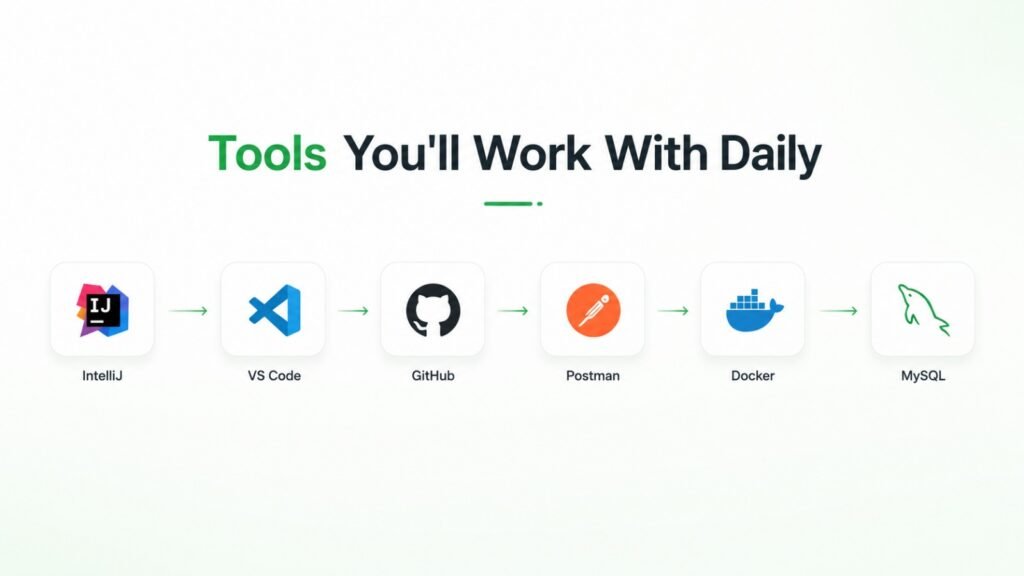
Learning programming languages is only part of the job. In real companies, developers spend just as much time working with the tools that help teams build, test, and manage applications together.
Tool | What You’ll Use It For |
IntelliJ IDEA or Eclipse | Writing Java code |
VS Code | Frontend development |
Git | Tracking code changes |
GitHub | Collaborating with teams |
Postman | Testing APIs |
MySQL Workbench | Managing databases |
Maven | Managing project dependencies |
Docker | Running applications consistently across environments |
Don’t worry if most of these names look unfamiliar right now. Every experienced developer started in exactly the same place. As you build projects and gain hands-on experience, these tools gradually become part of your everyday workflow.
Look at how much that table actually covers. That’s exactly why trying to absorb all of it at once, with zero order, burns people out fast. Skills required for Java full stack developer roles matter less as a checklist and more as a sequence, learning them in an order that actually builds on itself. If you want that full, step-by-step order laid out properly instead of guessing, we’ve written it out here: our Java Full Stack learning order.
What Does a Java Full Stack Developer Actually Build?
Somehow, the job description appears more complex than it truly is. There is no better way of comprehending it than examining the kind of projects a Java Full Stack developer is supposed to develop.
Take an online food ordering service. You can see the restaurants, add things to your cart, pay for the order, and even trace its progress. The part you can actually see on your screen is called the frontend. However, behind the scenes, the Java language processes your order, checks the availability of the restaurant, saves information in the database, and processes payments and sends the feedback back to the screen.
The same approach can be seen in banking applications, hospital management systems, company portals, online stores, airline booking services, school management applications, and so on. In all these cases, each time you click a button, backend code, databases, and APIs do their work under the hood.
This is the reason why businesses find full stack developers valuable.
Java Full Stack Developer Salary in India
Now for the part everyone actually scrolls down to find: the salary of Java full stack developer roles across different experience levels.
According to Glassdoor’s most recent data, here’s roughly how full stack Java developer salary breaks down by stage:
Career Stage | Typical Annual Salary (India) |
Entry-level / fresher | Around ₹4.2 lakh |
Typical / median | Around ₹5.5 lakh |
Experienced | Around ₹8.5 lakh |
Senior/top earners | ₹13 lakh and above |
That’s a wide spread, and where you actually land on it comes down to things you can control: real project experience, how solid your fundamentals genuinely are, and whether you’re aiming at service-based or product-based companies, since they don’t pay the same for similar titles. Pune’s mix of both types means there’s real upward room once you’ve got a couple of solid years and a few real projects behind you.
No single number tells the whole story here. What matters is that this is a role with genuine room to grow, and that growth tracks pretty closely with how seriously you actually build your skills, not how many buzzwords make it onto your resume.
Is Java Full Stack Development a Good Career Choice?
Short answer, yes. Here’s why it is not mere marketing.
The Java language has always been one of the most popular languages in the world in terms of the number of developers using it. It has been regularly topping the independent ratings measuring the popularity of languages. This longevity is important because it shows that your skills will not be connected with a transient trend but with a language that has been working at large scale for quite a while and has no intention of silently dying out.
Also, full stack development gives the developer certain freedom that many other professions lack. You are not limited to front-end or back-end development only.
Want the deeper case for why this specific role is still worth pursuing right now, including how Pune’s own hiring landscape looks? We’ve covered that separately here: why Java Full Stack Developers are still in high demand.
Still, “good career” always comes down to whether the actual work suits you personally. If building the complete picture of an application, bouncing between frontend polish and backend logic, sounds energizing rather than exhausting, this is a genuinely solid path.
Curious whether this path actually fits your background? Book a free demo class and get a straight, honest answer from a trainer before committing to anything.
Java Developer vs Java Full Stack Developer, What’s the Difference?
This one trips people up constantly, worth untangling in one clean pass.
The difference between a Java developer and a Java full stack developer, in plain terms, is scope. A “Java Developer” title can mean a dozen different things depending on the company, sometimes strictly backend work, sometimes something narrower tied to one system or module. A “Java Full Stack Developer” is more specifically defined, responsible for both frontend and backend, not one piece of it. When comparing job postings, it genuinely helps to read the actual list of responsibilities instead of trusting the title, since companies aren’t consistent about how they throw these terms around.
How to Actually Become a Java Full Stack Developer
Understanding the role is one thing. Actually becoming one is a different conversation entirely, so here’s the real, unglamorous path.
Start with the fundamentals, properly, not rushed. Core Java and basic programming logic come first, because literally everything else gets stacked on top of that foundation. From there, build real hands-on experience through actual projects, not tutorials you follow along with and forget by next week. A small project you genuinely built yourself teaches you more than passively watching someone else build one on YouTube.
Structured training or certification helps too, not because a certificate alone lands you a job, but because a decent structured program forces the kind of consistent, ordered practice that’s brutally hard to replicate solo. Alongside that, build a portfolio and resume that actually demonstrates ability, not a list of buzzwords, real projects an interviewer can poke at and ask genuine questions about.
And finally, take interview prep seriously, since that’s exactly where a lot of otherwise well-prepared candidates stumble. SQL questions specifically catch people off guard more than you’d expect, mostly because it’s a skill people practice far less than their main language. Want to close that gap before it costs you an offer? We’ve broken down the SQL questions that trip up most full-stack candidates, with answers written the way you’d actually say them out loud in the room.
So, What Does a Java Full Stack Developer Actually Do All Day?
Every organization runs differently, but for the most part, there’s a normal pattern throughout the day.
For instance, you may kick off your morning with a quick discussion during a short team meeting where everyone explains what tasks they’re doing. Afterwards, you can spend a couple of hours either implementing a new feature, debugging an existing one, or developing a new API in Spring Boot.
During the latter part of your day, you can then switch focus to the frontend to integrate this API with React or Angular UIs, run some tests to ensure that it all works well, and commit your work in Git so that the team can review it.
There are days when you will be implementing new features, and there are other days when you will just be debugging issues, improving the performance, or assisting your teammates in resolving their problems. This is also one of the reasons why a lot of developers prefer full-stack programming.
Learn the Skills in the Right Order
Every single beginner commits the same blunder, which is attempting to master everything at once.
Today a couple of videos of Java, tomorrow some React, and over the weekend perhaps a little bit of SQL. Although this method looks like you are being productive, you will end up with nothing making sense in the end, as there is no connection between everything yet.
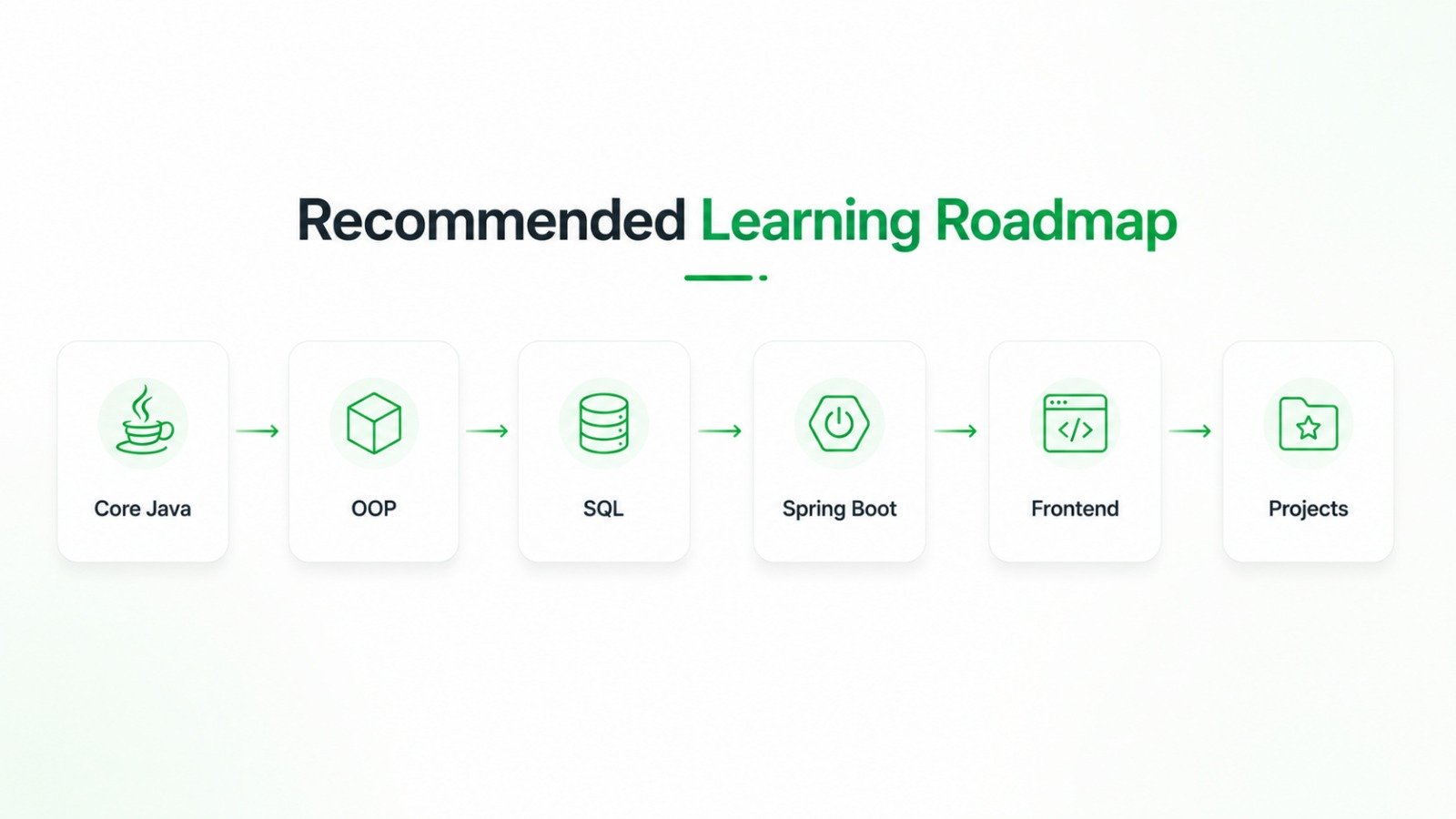
The most efficient method would be to start off in layers. Begin with Core Java and object-oriented programming. Then, once you get familiar with both, head over to Databases and SQL. Continue with Spring Boot, REST APIs, HTML, CSS, and JavaScript for the front end. Lastly, end it off by working on a project that ties everything together.
This method may take a little longer to master than the previous one but saves a lot of frustrations along the way.
What Employers Actually Look For Beyond the Syllabus
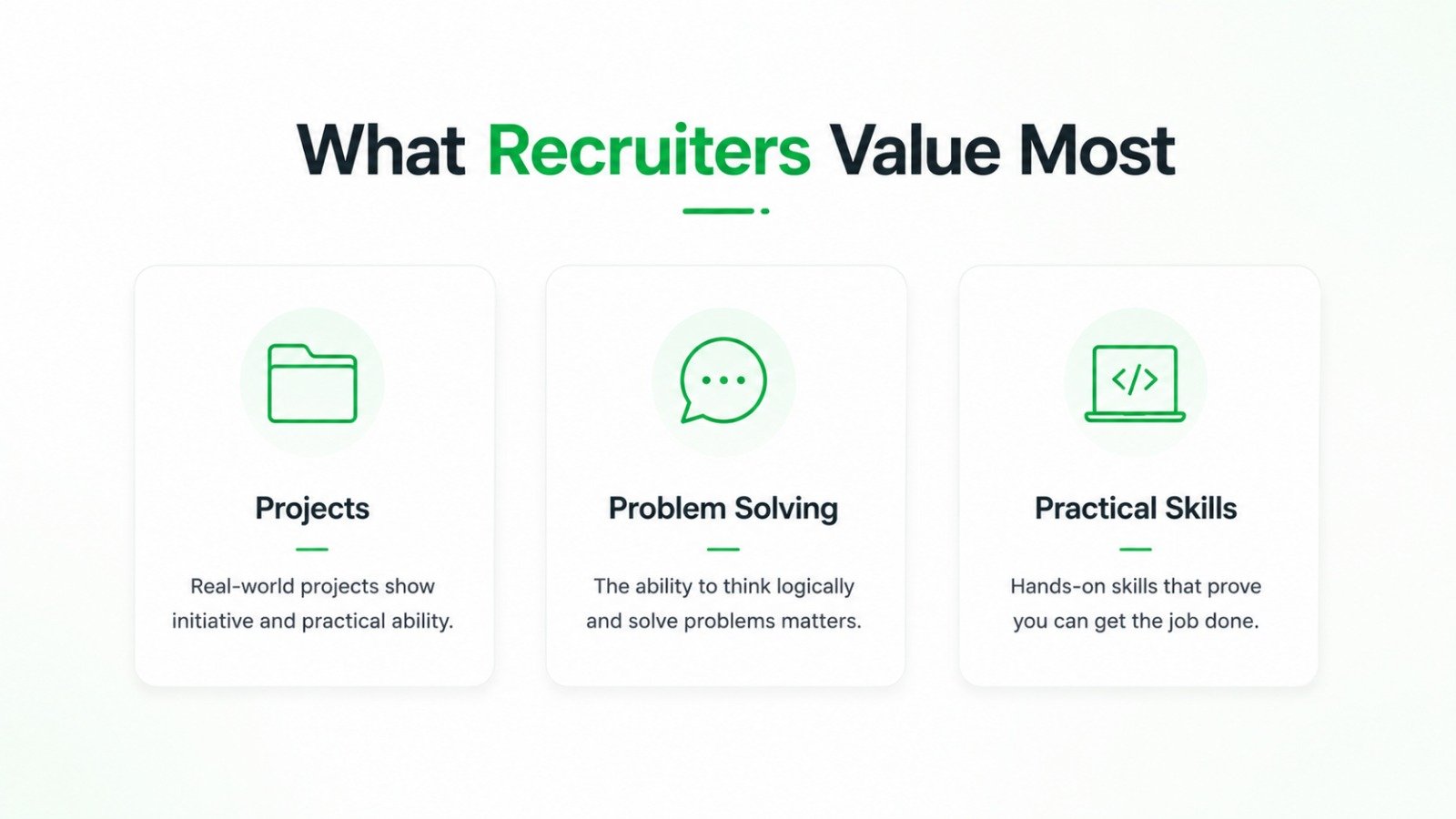
Here’s something that doesn’t get said enough. Two candidates can technically “know” identical skills on paper, Java, Spring Boot, Angular, SQL, and still walk away from the same interview with completely different outcomes. The gap usually isn’t hidden knowledge. It’s how that knowledge gets demonstrated under a bit of pressure.
Employers pay close attention to whether you can explain your own project decisions clearly, not recite textbook definitions. Why did you structure the database that way? What would you change if you rebuilt it today? Someone who actually built something, even something small and a little rough, answers naturally. Someone who only followed tutorials tends to freeze the second a question drifts off-script.
The quieter thing that matters is consistency. A resume listing three half-finished projects reads weaker than one showing a single project built properly end to end, deployed, working, something you can walk an interviewer through screen by screen. Building your first portfolio piece right now? Resist starting five things at once. Finish one thing properly first. Once you’ve built that project, the next challenge is explaining it confidently in interviews. If you’re preparing already, these interview questions are a good place to start.
Java Full Stack Developer Jobs: The Reality About the Demand
Jobs for Java full stack developers are still doing well, and Pune continues to be one of the top spots for this particular role, because there are a lot of IT parks concentrated here along with a combination of big players and product startups. And that’s an important detail because it means that you can see openings at various kinds of firms, rather than just one kind.
Are you actively looking for a job, or preparing to do so soon? In addition to improving your skills, the best advice would be to read actual job ads for positions you might actually be interested in, as requirements tend to change quickly.
Choosing a Java Full Stack Developer Course in Pune
A lot of people land at this exact point in their research and start hunting for a Java full stack developer course in Pune, or a Java full stack developer course in Pune offline option, specifically if they prefer classroom learning, so let’s not dance around it. Others search for a Java full stack developer course in Pune without a strong preference either way, and honestly, the format matters less than what’s inside it.
Pune has no shortage of institutes teaching this, both online and offline, so the real question isn’t just where; it’s what the course should actually cover. A course worth your time walks through Core Java and OOP properly instead of rushing past them, covers a real frontend framework like Angular or React, spends genuine time on Spring Boot and Hibernate rather than skimming the surface, includes hands-on database and SQL practice, and ends with real interview preparation, not just a certificate handed out at the finish line.
Offline versus online mostly comes down to personal learning style at this point; both work fine when the actual teaching and project work are solid. What matters more than the format is whether you’re building real things along the way, not just watching someone else type on a screen.
Final Thoughts
Java full stack development isn’t some vague catch-all term people throw around to sound impressive. It’s a specific, well-defined role built on a genuinely durable language, with real skills behind it, a real learning order, and real upside if you approach it seriously instead of looking for a shortcut that doesn’t exist. Whether it’s right for you comes down to one honest question: does building the complete picture of an application, not just one slice of it, actually sound like work you’d enjoy showing up for?
If it does, and you’d rather learn this with real structure, live projects, and mentors who’ve walked plenty of students through exactly this path, instead of piecing it together from scattered videos at midnight, our Java Full Stack program covers everything in this guide from the ground up. See the full Java Full Stack course details and see how it fits where you’re actually starting from.
If you are weighing Java against other languages, see whether learning Java is still relevant.