You have the Java basics. Maybe you have even finished a course, built a few projects, or started applying for java jobs. Then you look at your resume and notice the part you have been worrying about for months: there is a gap.
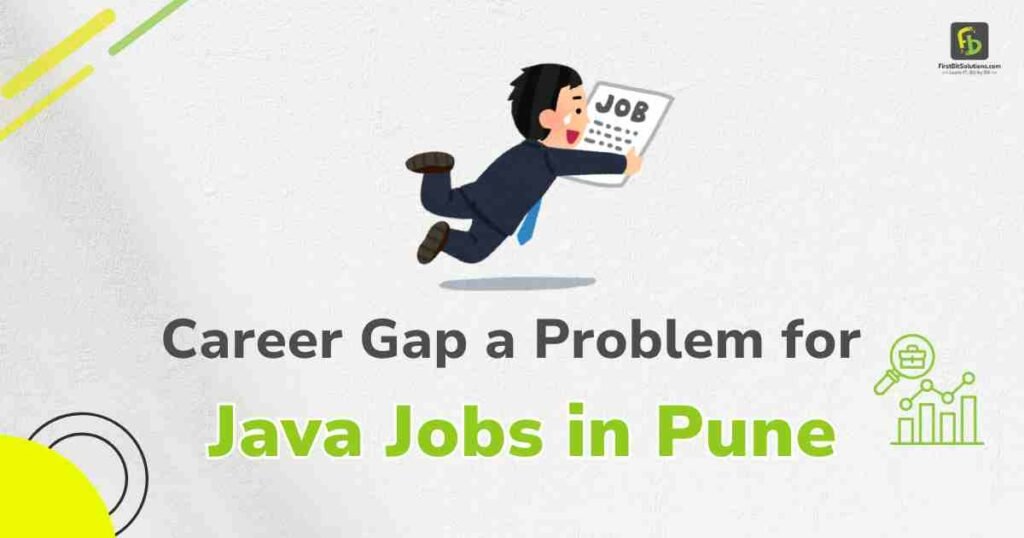
If you are searching for a career gap Java Full Stack job Pune, the fear is usually the same: “Will recruiters reject my resume before I even get a chance to explain?”
The honest answer is no, not automatically.
A career gap can raise questions, especially when you are trying to return to software development after time away. But the gap itself is only one part of your profile. Your current Java skills, projects, problem-solving ability, and how clearly you explain the break can matter far more once you get into the hiring process.
Quick answer: A career gap alone rarely disqualifies a candidate for Java Full Stack roles in Pune. What matters is whether you can demonstrate current, working skills, real projects, and a clear, honest explanation. According to LinkedIn’s global career-break research, 51% of hirers said they were more likely to contact a candidate when they understood the context of the career break.
So if you have been treating the blank space on your resume as the biggest problem, it may be time to look at the bigger picture.

What Actually Concerns Hiring Managers About a Career Gap?
A gap creates one practical question: How current are your skills today?
That question matters more in software development than it might in some other careers because the tools and practices used by developers keep changing. Someone who last worked with Java several years ago may need to refresh Spring Boot, REST APIs, SQL, Git, testing practices, or modern development workflows before being ready for a current role.
That does not mean a person with a gap is automatically behind. It means the candidate needs evidence that the skills have been brought up to date.
For someone applying for a Java Full Stack role, that evidence can be surprisingly straightforward. A working Spring Boot application, a GitHub repository with readable code, a database-backed project, and the ability to explain technical decisions can tell an employer much more than a certificate sitting on a resume.
This is also why the traditional route you took into IT is not always the most useful thing to obsess over. A degree, diploma, or certificate can establish part of your background, but employers still need to understand what you can actually do with the skills you claim to have. That distinction is covered in more detail in a guide to Certificate Course vs Degree for IT Jobs in 2026.
The same principle applies to a career gap. You cannot change the dates on your resume, but you can change what your profile demonstrates today.
What does a gap actually signal?
A hiring team cannot know everything about a candidate from a CV. A blank period can therefore create uncertainty, particularly when there is no explanation and no evidence of recent technical activity.
That uncertainty is different from saying, “This candidate has a two-year gap, so reject them.” A more useful way to think about it is that an unexplained gap leaves questions unanswered. Have the candidate kept learning? Are they comfortable working with current tools? Can they still build and debug software? Are they ready to return to a structured work environment?
Your application should answer those questions before an interviewer has to ask all of them.
A strong recent project can do that. So can a clear skills section, an active GitHub profile, relevant coursework, internship experience, freelance work, or other legitimate technical activity during the period away from formal employment.
That is where the conversation starts shifting from why you were away to what you can contribute now.

The Real Data on Career Gaps
Career breaks are much more common than many candidates assume. LinkedIn surveyed nearly 23,000 workers and more than 7,000 hiring managers for its career-break research and found that 62% of workers had taken a career break at some point in their professional career.
That figure is useful, but there is an important limitation: this is global LinkedIn research, not India-specific research and not data specifically about Java developers in Pune. It should not be interpreted as proof that Pune employers treat every employment gap positively.
The more relevant finding is what employers said about context. LinkedIn reported that 51% of employers were more likely to call a candidate back when they knew the context behind the person’s career break.
That discovery means that there are some things a candidate should think differently about when building a resume.
It is important to make the narrative understandable rather than to try to hide it. One does not have to give personal details and write some kind of story about why he or she has decided to take a break from the job.
The most straightforward answer will be sufficient; it is then necessary to return to talking about professional goals and preparation for the new position.
LinkedIn actually launched the Career Break feature for profiles in 2022. It was divided into such areas as caregiving, health and well-being, professional development, and others. As LinkedIn stated, the purpose of the addition was to let people clarify their periods of absence from paid work.
It is important to note that one’s career does not necessarily have to be linear, starting from graduation and going further to the job, promotion, etc. What really matters is how the narrative sounds reasonable and if the current profile gives the reason to keep talking.

How to Talk About Your Gap Without Over-Explaining
Sometimes, the biggest blunder candidates commit about an employment gap has nothing to do with the gap itself. Instead, it concerns how much effort they dedicate to defending the gap.
One does not need to enter the Java job interview with the intention of apologizing for a couple of years of his/her life. You need to answer the question honestly, keeping an appropriate balance of comfort level, and connecting the answer to current achievements.
For instance, one may say that he/she was not employed for some time and is now preparing to return to software development. If some projects have been done, Java basics refreshed, SQL practiced, and Spring Boot mastered, that is enough of something that may be evaluated by the interviewer.
You should avoid giving the impression of making an apologetic speech about the employment gap. You should merely provide the context and point to further plans.
Keep the explanation factual
There is no universal “correct” reason for a career gap. Different people step away from employment for different circumstances, and the candidate decides how much personal information they want to disclose.
What matters professionally is clarity.
If the interviewer asks, “Can you explain the gap between these two roles?” answer the actual question first. Avoid turning a 30-second explanation into a five-minute history of everything that happened during that period.
Then bring the focus back to your current readiness.
You might discuss what you have learned recently, the type of Java development you are targeting, or the project you have built. That gives the interviewer a chance to evaluate something more useful than the dates on your resume.
Do not invent experience to fill the blank
This is one area where honesty matters more than clever resume writing.
Do not turn self-learning into employment. Do not describe a practice project as a production application. Do not add fictional freelance clients because you think the gap looks uncomfortable.
Technical interviews have a way of exposing inflated claims quickly.
If you learned Java during the gap, say you learned Java. If you built a project, show the project. If you completed training, list the training accurately. A smaller profile that can be defended confidently is much stronger than an impressive-looking CV that falls apart under technical questions.
Once the explanation is clear, the next job is proving that your technical skills are current.

What Actually Strengthens a Comeback Profile?
A career comeback becomes easier to evaluate when the candidate gives employers something tangible to inspect.
For a Java Full Stack applicant, that usually means building rather than simply collecting certificates. A practical IT portfolio for freshers in Pune can show the kind of work you are capable of doing, particularly when it includes source code, screenshots, a project explanation, and a clear list of technologies used.
One strong project can be more useful than five unfinished tutorials.
Suppose you build a Spring Boot application with a REST API, MySQL database, authentication, validation, exception handling, and a basic frontend. You should be able to explain how the application works, why you structured the code a certain way, how data moves between layers, and what happens when an API request fails.
That level of understanding gives an interviewer something concrete to discuss.
Build one project you can defend
Candidates returning after a gap sometimes try to compensate by building six or seven small projects. The result is often a GitHub profile full of tutorial-level repositories that nobody can explain properly.
A better approach is to build one substantial application and understand it deeply.
For a Java Full Stack candidate, the project could include:
- A Java backend that uses Spring Boot to expose REST APIs and handle application logic cleanly.
- A relational database such as MySQL with properly designed tables, relationships, queries, and basic data validation.
- A frontend that communicates with the backend through APIs instead of relying only on static screens.
- Git and GitHub usage that shows meaningful commits, readable code, a useful README, and a clear project structure.
- Testing and debugging work that demonstrates you can identify problems instead of only following a tutorial when everything works.
The exact project matters less than your ability to discuss it honestly. If an interviewer asks why you used a particular database structure, what happens when invalid input reaches the API, or how authentication is handled, you should have an answer based on your own work.
That is much harder to fake, and much easier for a hiring team to evaluate.

Refresh the fundamentals before chasing advanced topics
A long break can make familiar concepts feel rusty. That is normal.
You may remember Java syntax but struggle with collections. You may understand SQL but hesitate when writing joins. You may have used Spring Boot before but need time to remember dependency injection, REST controllers, exception handling, or JPA relationships.
Do not treat that as evidence that you cannot return to IT.
Treat it as a sign that the fundamentals need deliberate practice. If you are rebuilding your Java base after time away, this guide on Why Beginners Quit Learning Java in the First 30 Days can help you avoid the common pattern of trying to learn too much too quickly.
A sensible refresher should involve writing code, not just watching videos. Solve small Java problems, write SQL queries, build APIs, debug your own errors, and gradually connect those pieces into a complete application.
The aim is not to remember everything. The aim is to become comfortable solving problems again.
GitHub should show current activity
GitHub is not mandatory for every Java job, but it can make your technical claims easier to verify.
A recruiter or interviewer who sees a recent repository can at least inspect what you have built. A project README can explain the purpose of the application, technologies used, major features, setup instructions, and what you personally worked on.
That becomes especially useful when your formal employment history contains a gap.
Your GitHub does not need to look like a senior developer’s profile. It needs to look genuine. Recent commits, sensible project structure, meaningful code, and a project you can explain are more valuable than dozens of repositories created just to make the activity graph look busy.
If You’re Coming From a Non-IT Background Too
A non-IT to IT career gap can feel more complicated because you may be explaining two changes at once. Perhaps your previous education or work was outside software, and now you are trying to enter Java development after spending time away from employment.
That does not mean you need to create a completely different strategy.
The same core question still applies: what can you demonstrate today?
Someone changing careers needs to show technical readiness because the previous role may not provide software-development evidence. A candidate with an employment gap needs to show recent relevance because the timeline may raise questions about currency.
If both apply to you, your portfolio, technical preparation, and interview readiness become even more important. The broader question of making a Career Switch to IT Without a CS Degree deserves its own discussion, but the practical principle is simple: build evidence around the role you want rather than spending all your energy explaining the role you had before.
For candidates in Pune specifically, choosing a structured learning route can also help create that evidence. Java classes for career gap candidates in Pune can be useful when the programme includes hands-on development, projects, interview preparation, and current technologies rather than treating classroom attendance as the end goal.
The course itself is not the comeback. The skills you can demonstrate after completing it are.
Ready to Rebuild Your Java Skills?
If you have been away from IT and are finding it difficult to figure out where to restart, FirstBit Solutions offers a Java Full Stack course in Pune with practical learning, projects, and interview preparation. The structured approach can help career-gap candidates rebuild their technical foundation and prepare for Java development roles. Book a demo class today.
What Should Your Resume Look Like After a Career Gap?
Your resume does not need to apologise for the gap. It needs to make your current direction easy to understand.
Put your relevant technical skills where a recruiter can find them quickly. Java, Spring Boot, SQL, REST APIs, Git, databases, frontend technologies, testing tools, and other technologies should only appear if you can actually work with them.
Then give your strongest project enough space to demonstrate what those skills mean in practice.
A useful project description explains the problem, what you built, the technology used, and what you personally handled. “Developed a web application using Java” tells a recruiter very little. Explaining that you created REST APIs with Spring Boot, connected them to MySQL, implemented validation and exception handling, and integrated the backend with a frontend gives the reader something concrete to assess.
The gap itself can be represented honestly without allowing it to dominate the page.
If you have legitimate learning, project, freelance, internship, or other relevant activity from that period, include it where appropriate. Do not manufacture a job title simply because an empty timeline makes you uncomfortable.
Your resume should make the reader think, “This person is ready to be assessed for a Java role,” rather than, “Why were they unemployed?”
What About a 2-Year or Longer Gap?
A two-year gap may attract more questions than a three-month gap. Pretending otherwise would give you bad advice.
Length matters because a longer period away from software development can mean more time for tools, practices, and expectations to change. The solution is not to panic about the number. It is to make your recent technical preparation strong enough that the number has less weight.
Think about the difference between these two profiles.
Candidate A has a two-year gap, a certificate, and a resume listing Java and Spring Boot, but cannot explain their projects or write basic SQL confidently.
Candidate B has the same two-year gap but has spent recent months rebuilding Java fundamentals, completed a substantial Spring Boot application, uses GitHub regularly, can write SQL, and can explain how their application works from frontend request to database response.
The dates are identical. The evidence is not.
That is why the question “What matters more, career gap or skills?” does not have a one-word answer, but current, demonstrable skills give you something concrete to compete on.

The Career Gap Is Not the Part You Need to Fix
You cannot rewrite the time you spent away from employment, and trying to hide it can create more problems than the gap itself. What you can change is how prepared you are when an employer looks at your profile in 2026.
For a career gap Java Full Stack job in Pune, focus on the things you can control: current Java knowledge, Spring Boot, SQL, APIs, Git, a strong project, a credible GitHub profile, and the ability to explain your career direction without becoming defensive about your past.
LinkedIn’s research shows that career breaks are common globally, with 62% of workers surveyed reporting that they had taken one, while 51% of employers said they were more likely to call a candidate back when they understood the context.
The numbers do not guarantee an interview. They simply show that a career break does not tell the whole story.
Planning Your Return to IT?
A career gap does not mean you have to start your career from zero. If Java Full Stack is the direction you want to pursue, FirstBit Solutions can help you build the practical skills, work on projects, prepare for interviews, and get placement assistance as you work towards becoming job-ready.
Explore FirstBit Solutions’ Java Full Stack training in Pune and take the next step with a clearer learning plan.
FAQs
Does a career gap stop you from getting a Java developer job?
No. A career gap does not automatically prevent you from getting a Java developer job. Current Java skills, practical projects, SQL knowledge, GitHub activity, and interview performance can strengthen your profile. LinkedIn’s global research found that 51% of employers were more likely to call a candidate back when they understood the context of the career break.
How do I explain a 2-year career gap in an IT interview?
Be honest, brief, and professional. Explain the gap without sharing personal details you are uncomfortable discussing, then focus on what you have done to prepare for your return to IT.
Do Pune IT companies hire candidates with employment gaps?
Yes. Candidates with employment gaps can apply for IT jobs in Pune. Hiring decisions vary by company, role, experience, skills, and interview performance.
What matters more, career gap or skills?
For a Java Full Stack role, current skills and practical ability matter greatly. Strong Java fundamentals, Spring Boot, SQL, projects, and interview preparation can help reduce concerns about an employment gap.
Is a 2-year employment gap bad for a software developer?
Not necessarily. A longer gap can mean your technical skills need refreshing, especially if you have not worked with Java or related technologies recently. Building current projects and practising technical skills can help you demonstrate your readiness.
Should I mention my career gap on my resume?
Keep your employment history accurate. If the gap needs context, explain it briefly and use relevant projects, training, or professional development to show what you have done during your return to IT.
Can Java classes help candidates with a career gap?
Yes, structured Java classes for career gap candidates in Pune can help refresh fundamentals, practise development, build projects, and prepare for interviews. Look for practical training and placement assistance rather than choosing a course only because it offers a certificate.